
A practical one day a week (Tuesdays) course that enables participants to develop more meaningful connection to the Victorian Central Goldfields on Dja Dja Wurrung Country. Participants will learn indigenous world views and nature connection, along with applied skills in land management, ecological restoration, plant weed and animal identification, regenerative living, carbon reduction, resilience and food systems. Presented in collaboration by five local organisations including: Castlemaine Commons, Connecting Country, Nalderun Education Aboriginal Corporation, Castlemaine Institute and the Maldon Neighbourhood Centre.
The 8 weeks will cover a mix of visits to country, information, introductions and skills including:
· Introduction day at Leanganook
· Landcare – Connecting Country
· Climate and Resilience Friends of the Earth & Castlemaine Institute
· Reading local landscapes: the layers of geology, ecology and landuse – Castlemaine Institute
· Living Simply
· Local food systems
· Tour with Aboriginal Elder, Nalderun Aboriginal Education Organisation
· Bush walk overnight – morning bird chorus and closing
Tuesdays – Term 2 Starting 3rd May for 8 weeks
$750 Full / $550 Concession / $350 Subsistence.
Information sessions – 26th April:
Maldon 2pm
Castlemaine 6pm
For registration contact Maldon Neighbourhood Centre, info@maldonnc.org.au and 5475 2093 and
Enrolment form here: https://www.maldonnc.org.au/whats-on/life-long-learning
For more information contact Castlemaine Commons, Natalie Moxham natalie@leanganookyarn.com and 0448 372 466
Category: General
Let’s ride!
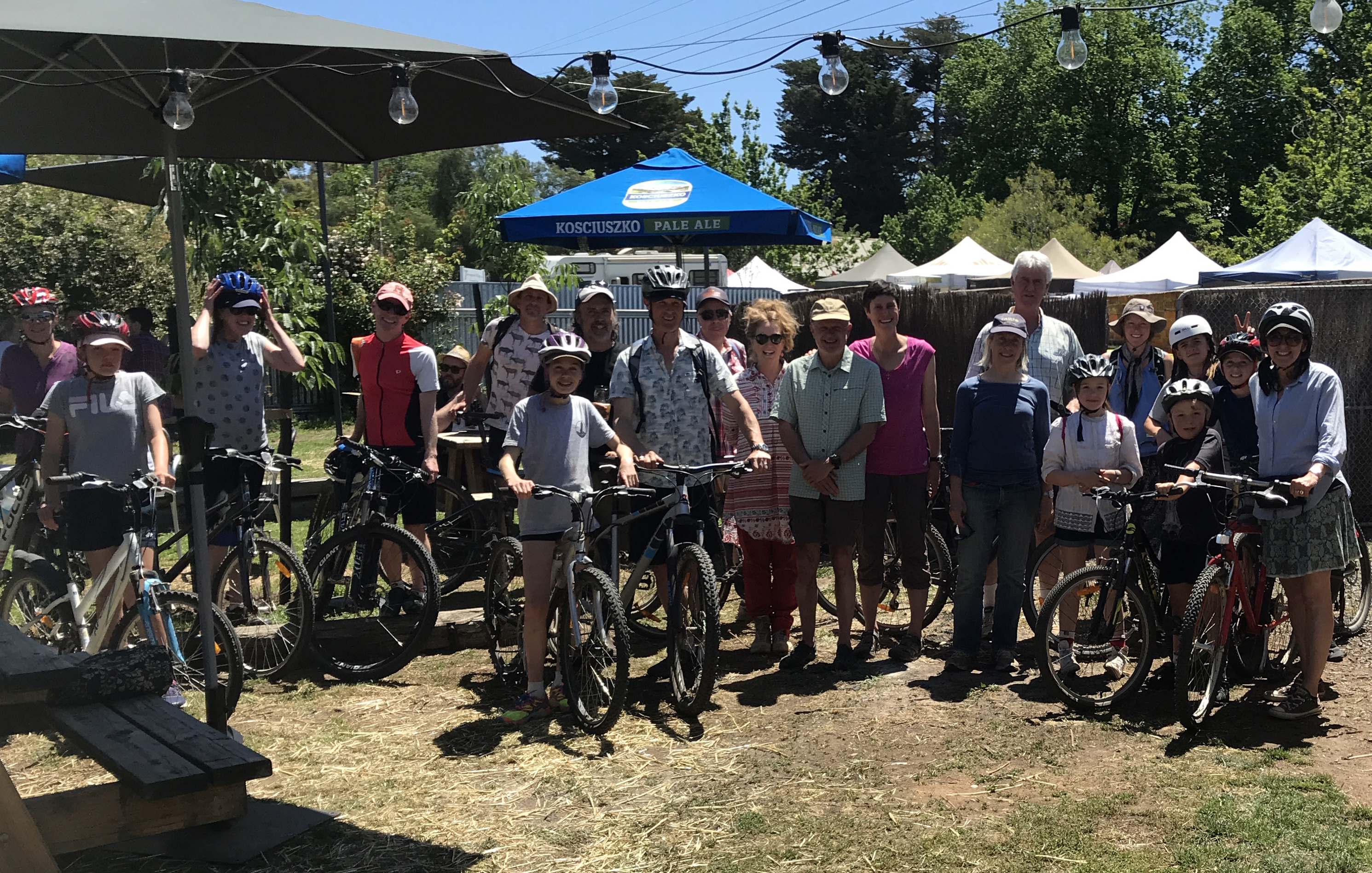
Can you believe it, the Muckleford Landcare bike ride is back! And we’re early (can’t wait until November). Following two years of cancellations, we are going ahead with the ride in April.
SUNDAY 3RD APRIL 2022, 11am, meet at the Muckleford train station. We will ride to Maldon for lunch, and return home via the Castlemaine-Maldon bike trail. I will make a booking at the Kangaroo Hotel for lunch, so please RSVP me with numbers. Ride with your family, bring a friend, or come by yourself and meet some Landcare people.
Please call Beth Mellick on 0431219980 or email me.
Climate-proofing planting in Muckleford
For over 20 years Muckleford Catchment Landcare Group have been designing plantings with climate change patterns in mind, and encouraging local landowners to consider the advantages of planting a wide range of species and provenances from many bio regions of Eastern Australia.
Within the community there have been government-funded plantings, including riparian restoration and habitat corridors, as well as some tens of thousands of rehabilitation plantings by members of the Muckleford Landcare group.
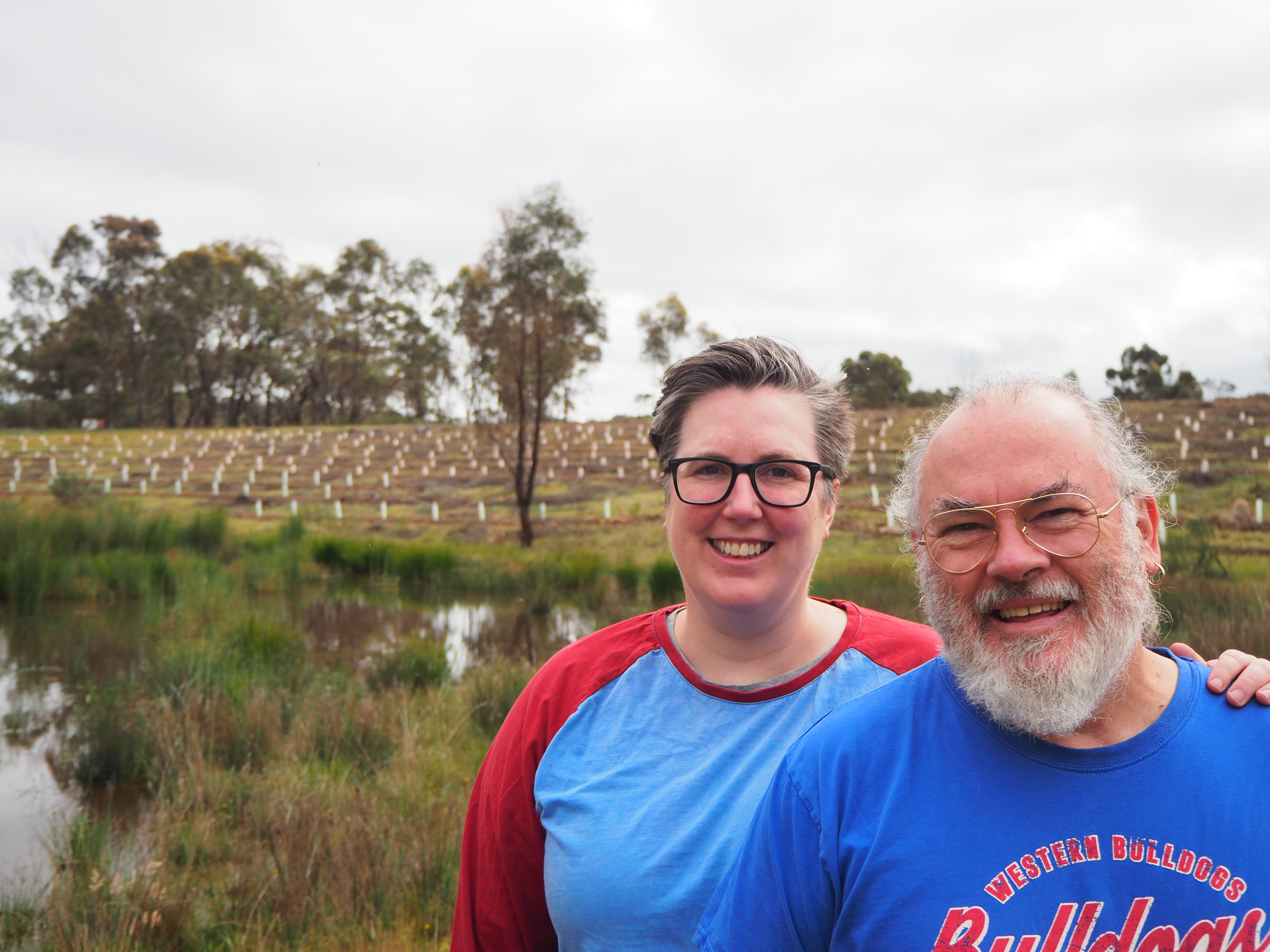
Elli Wellings and David Mallard purchased their 100-acre property in Walmer a few years ago, which was once used to graze sheep. They immediately did two things – reached out to the local community, and joined their local Landcare group.
As a first step, Elli and Dave made an effort to seek out expert advice about landscape function and plant selection in order to better understand the land they had in front of them, and what they could do to improve it.
It was not viable to have stock, and the couple’s long term vision was for the land to be restored. “We could see how the stock has impacted on the existing vegetation” said David. Ellie’s father is a bush regenerator in NSW so she understands how worthwhile it is to bring back native animals to a degraded landscape.
Over the past 12 months Dave and Elli have transformed their property, with the help of landscape restoration practitioner and Muckleford Catchment Landcare Group Vice President, David Griffiths. Together, they put in 6,500 plants on 10 acres as part of a farm forestry enterprise. Then came revegetation of an old paddock with a further 2,500 native plants to create a wildlife corridor between two dams. This corridor contains 20 species from wide-spaced trees to middle/understory plants, with a dynamic species provenance selection.
David and Ellie have spent nearly $50,000 to restore their new property and plant their forest. They are a glowing example of the type of tree-changers that add value to our Landcare movement.
Bassett Creek is happy
After 50ml of rain earlier this afternoon, the Bassett Creek is happily flowing. Here it is going through our planting.

Muckleford Catchment Landcare Group AGM
Sunday 12th December, 3pm-4pm, Muckleford train station
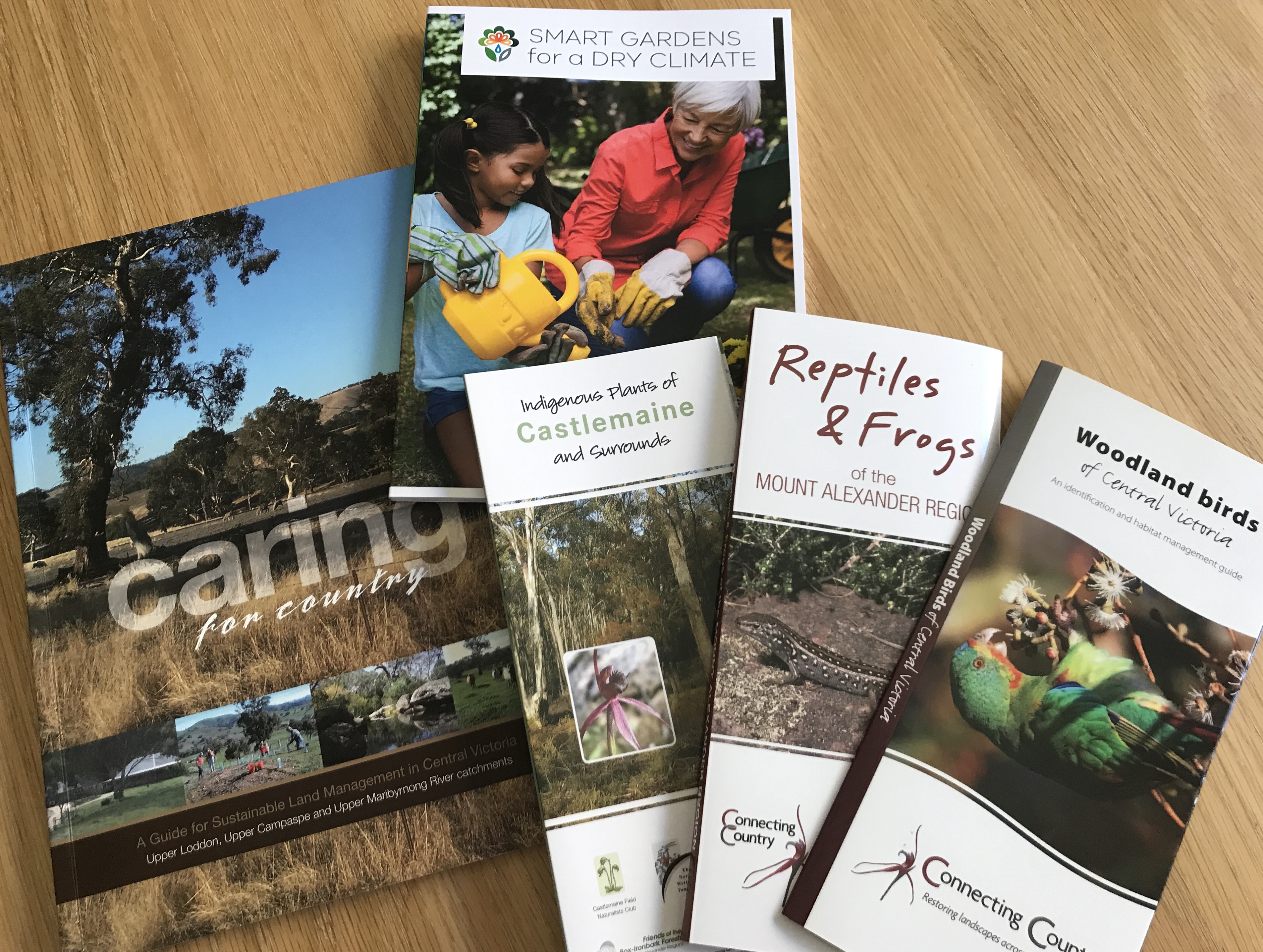
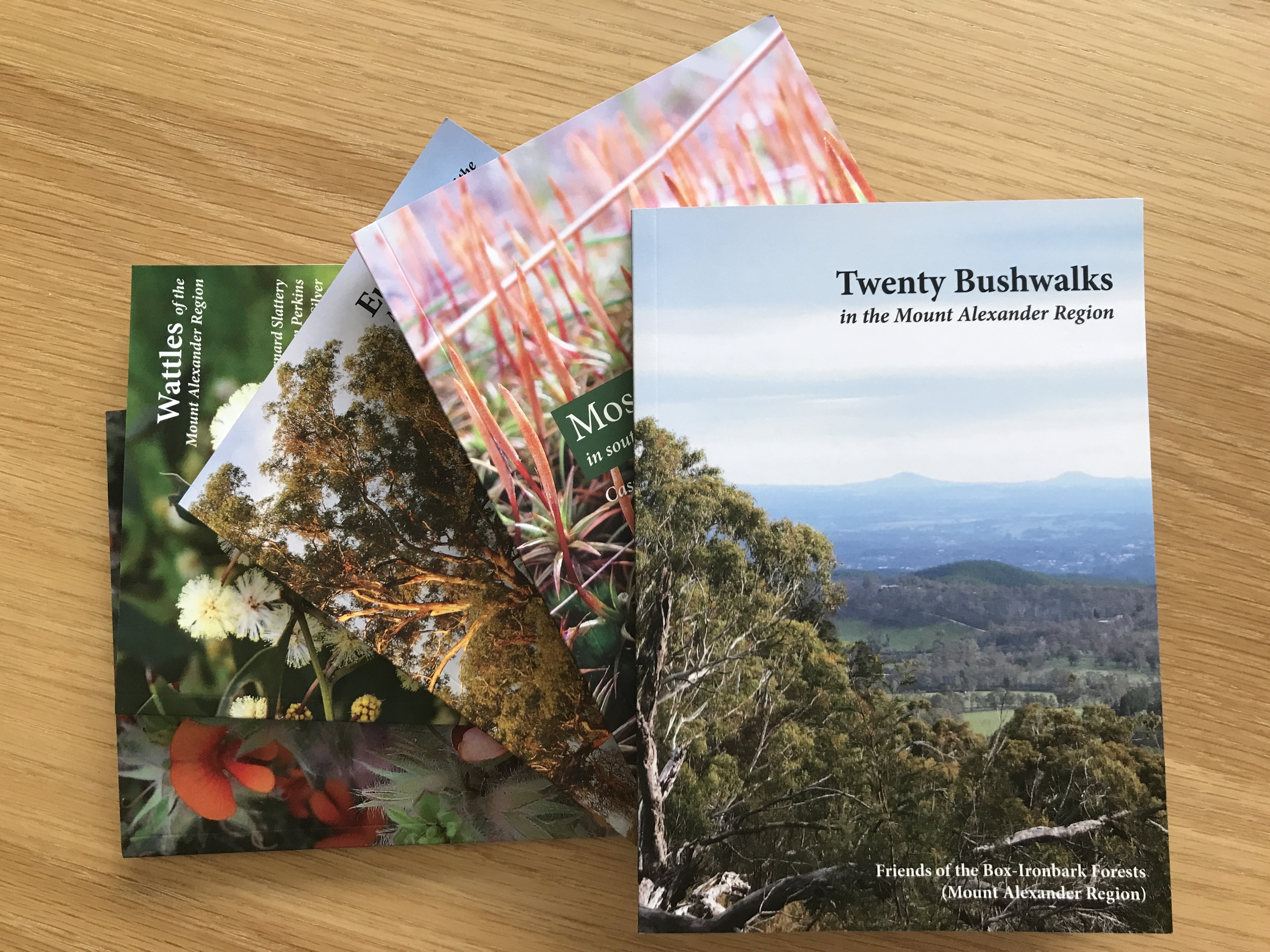
Stop by to say hello, vote in the committee, pick up some free guides, or buy the latest FOBIF book for only $10.
URGENT ACTION: Corellas are being killed
| You might have heard on the news that Bendigo Golf Club alerted local residents of their plans to ‘eradicate’ the corellas who live in the trees on the golf course, shooting has already begun. Corellas are native to Australia and are charismatic, social birds who mate for life and rely on tree hollows for their safe nesting sites. Little do they know that the trees they have found as homes in their ever-diminishing habitat are on a commercial golf course — and that this has placed them directly in the firing line. Please contact the golf course operations manager Liam Carney and politely but urgently request the business to stop the shooting immediately and seek a kinder and non-lethal outcome for wildlife who share the golf course grounds. CALL: 03 5448 4206 EMAIL: gom@bendigogolfclub.com.au |

Bike ride cancelled
Due to bad weather conditions, we have postponed the bike ride this Sunday, stay tuned for a new date…
Count down to the bike ride…
This Sunday is the Muckleford Catchment Landcare Group’s annual bike ride. You can bring friends and family, and you can ride at your own pace. Meet at the Muckleford train station at 11am, we will ride to Maldon and have a picnic in front of the information building. The Maldon market will be happening where we can buy food (or bring your own). And after eating, we will ride home.
Sunday 14th November, 11am-2(ish)


Annual bike ride in two weeks time!
We missed out on the bike ride last year because of covid. But this year we are definitely getting the bikes out and pumping up the tyres. Meet at the Muckleford train station, and we will do our group ride to Maldon. We will end up at the grassed area in front of the Visitor Information Centre in Maldon (next to the market) for a picnic. We can’t meet in the pub this year because it all has to be pre-booked. And then we’ll ride back!
Sunday 14th November, 11am, meet at Muckleford train station.
Leave the roadsides alone!
“The roadside which is bare of anything but the natural grasses, herbs and a sporadic shrub or two is much more interesting and refreshing than any artificial planting reflecting the suburban road or city street…” (Edna Walling, 1952)
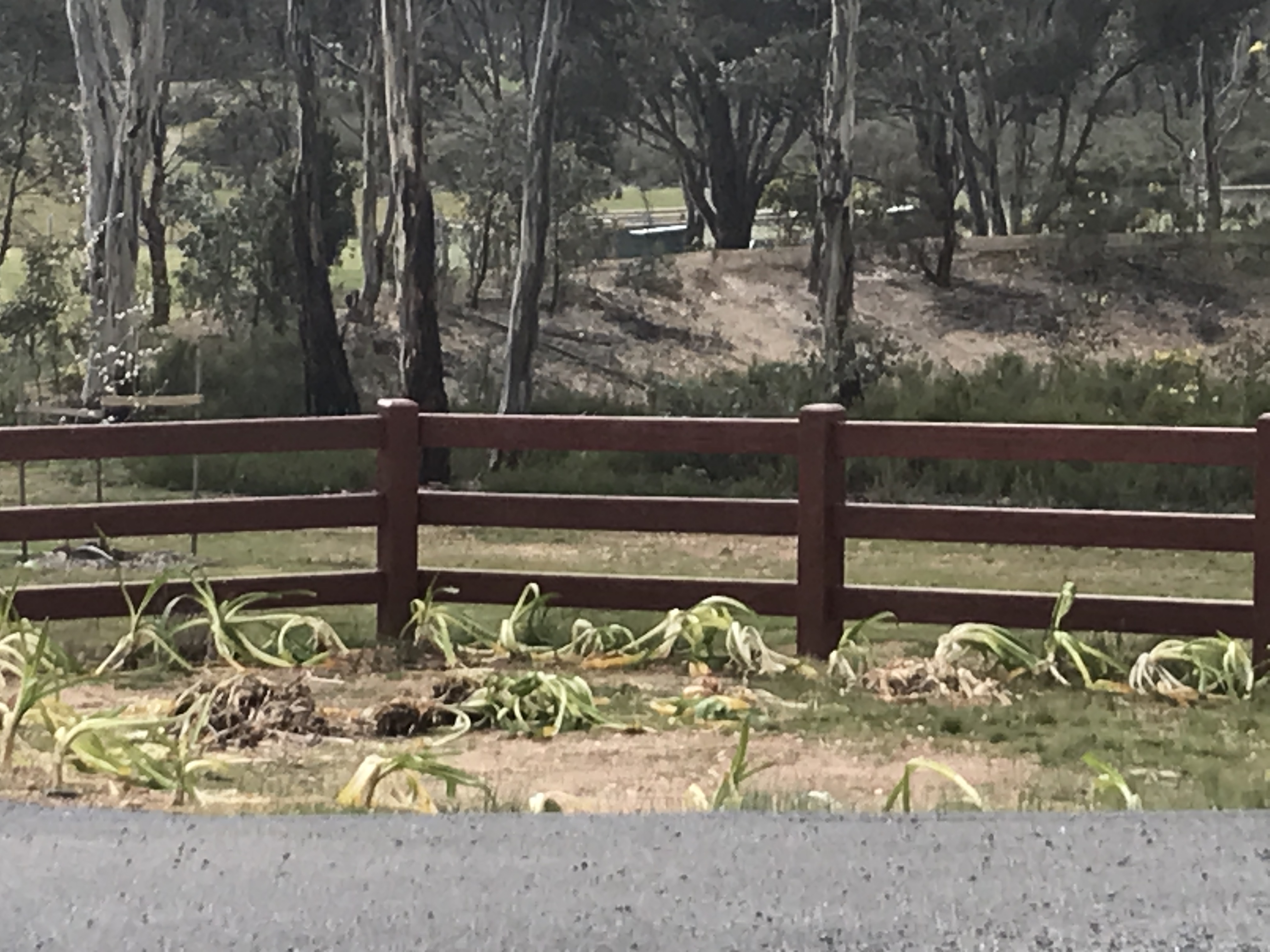
Here is some advice for new and existing landowners in Muckleford – if you move to the bush, if you live in the bush, then leave the bush alone. The roadside vegetation is a valuable part of the ecosystem and contains precious and sometimes endangered plant species. If you remove this vegetation, you will open up the ground to weeds and grass that you will constantly have to maintain. Rather than planting exotics, consider enhancing the existing vegetation with some small flowering native shrubs and herbs.
 mucklefordlandcare.org