At the AGM we would particularly encourage you to consider joining our committee. Nomination forms will be available on the night.
We are currently looking forward to a very active year and your voice will help us plan, implement effectively and deepen our community connections.
The committee meets once a month. If you are interested and wish to know more please contact the Secretary, Paul Hampton, tel 54742189.
AGM coming up
A reminder that our AGM is scheduled for Castlemaine Golf Club at 8.15pm on October 10. The formal meeting will be preceded by Don Watson’s talk about ‘The Bush’ at 6 pm, soup and light refreshments. The bar will also be open. We expect the whole evening to be concluded by 9:30 pm. If you intend to come along please let us know by Wednesday October 3.
This will be a great night to meet people and hear an outstanding thinker and writer. We look forward to seeing you.
Annual memberships are due on the night. We encourage you to take a membership. The small fee involved (currently $25) helps to support our basic functions: stationary, mailing, equipment etc.
Hear Don Watson reflect on “The Bush”
Don Watson is one of Australia’s wittiest, original thinkers and raconteurs, and is currently completing a book on the Australian bush. He will be revealing some of his insights into the Australian landscape as a prelude to the Muckleford Catchment Landcare Annual General Meeting on Wednesday 10 October. Don’s presentation will commence at 6pm, will be accompanied with soup and refreshments, and will be followed by the AGM at 8.15 pm
This landmark event is being held at the Castlemaine Golf Club, Pyrenees Highway, Castlemaine.
Members of the public are very welcome to join us for the talk and soup prior to the AGM.
Don Watson was an academic historian for 10 years before resigning to write political satire for TV and the stage (including The Gillies Report), and speeches for the Victorian Premier John Cain.
After time as a research fellow at The University of Melbourne he became Prime Minister Paul Keating’s speechwriter and adviser. He remained in that position until Keating’s electoral defeat in 1996. His account of this time, Recollections of a Bleeding Heart: Paul Keating Prime Minister (2002), remains a best-seller to this day
Don’s columns, articles and essays have appeared in all major Australian journals and newspapers.
In recent years Don has become internationally famous for his scathing yet hilarious books about the deterioration of contemporary language – Death Sentence: The Decay of Public Language (2003), and Watson’s Dictionary of Weasel Words, Contemporary Clichés, Cant & Management Jargon (2004).
His book American Journeys (2008) won The Age Non-Fiction and Book of the Year awards, the inaugural Indie Award for Non-Fiction, and the Walkley Award for Non-Fiction.
His latest release Bendable Learnings: The Wisdom of Modern Management follows on from Death Sentence and Weasel Words.
His views about a subject that is both dear to our hearts and culturally complex are bound to provoke much fresh discussion and thought.
If you are interested in farming, landcare and the future of ‘the bush’ then this talk is a must.
So that we can cater appropriately we would appreciate a RSVP. Please let us know you are coming at – mucklefordlandcare@gmail.com
Springing to life in Creasys Road
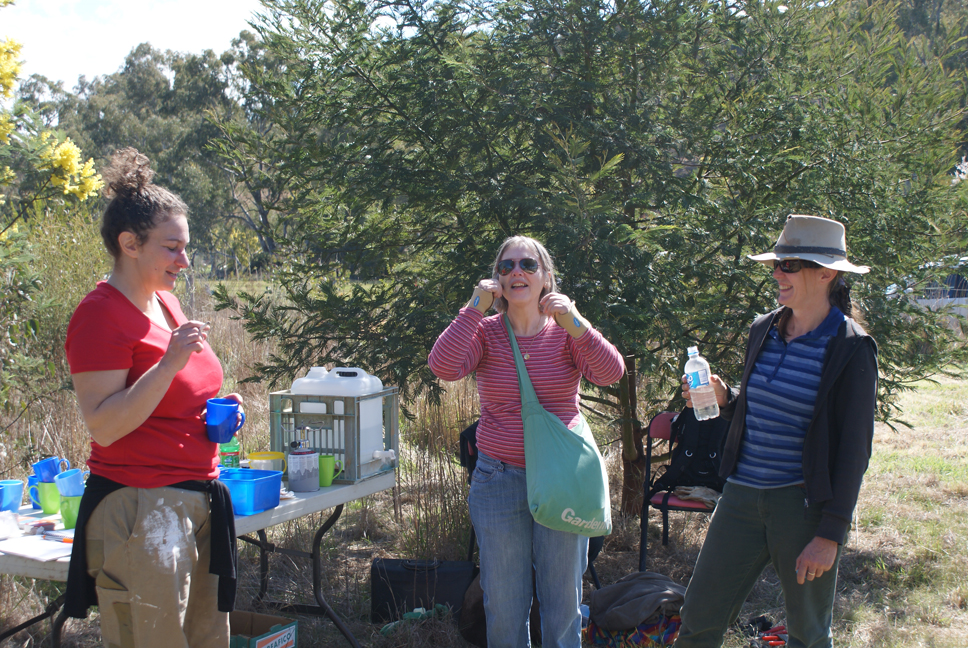
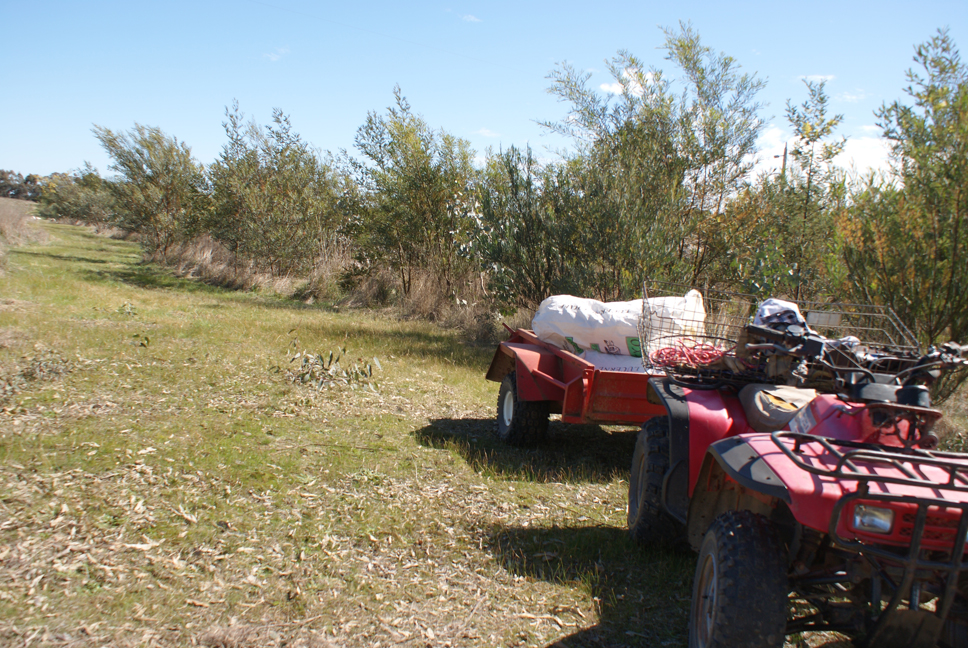
The balmy burst of spring weather certainly played its part and we had a good turn-out for our Sunday morning working bee in Creasys Road to celebrate Landcare Open Day. We managed to remove several hundred of our re-usable tree guards and join together for an amiable morning tea in the sun.

Below you will find the information leaflet about the project prepared by Sue Slaytor and made available to the participants. It has been an impressively successful project and well worth visiting if you are in the vicinity.
In the meantime, we encourage all landcarers to enjoy the other events this week, the details for which are available at the Connecting Country website.
And we recommend that you pencil our next event in your diary. On Wednesday, October 10, well-known author Don Watson will give a talk about his forthcoming book on the Australian bush. Not to be missed.
Creasys Road Corridor Project
Purpose: To link roadside vegetation in Turners Lane to Chinaman Creek by planting over 35 native species along a treeless section of Creasys Road.
Area: Approx. 2.1 hectares (3 private properties and south side of Creasys Road)
Support: 4 landholders, NCCMA (2nd Gen. funding), Mt Alexander Shire Council, CFA
Density: Average of 2,860 plants / hectare in a corridor 18 to 35 metres wide.

Site Prep: Spray Blackberry, St John’s Wort and Phalaris in January 2009, burn dead weeds in June, fumigate and collapse rabbit warrens. Prepare site with Yeoman’s plough/rotary hoe combination to open subsoil without inverting soil profile, cultivate topsoil and provide mechanical grass/weed control. The east site was netted to prevent rabbit entry.
Planting: Stock grown in Hiko trays was planted by two people using Pottiputki planters. Planting occurred intermittently. Planting Turners Lane commenced in late August 2009 and project planting was completed at the east site by early November.
The plants were not watered-in either at planting or afterwards. When planting within the last area the roots were dunked in wetted water absorbing crystals (temperatures had reached 30oC by then). The drought did not break until January 2010. Limited rainfall had managed to get deep into the soil profile because of the site preparation.
Plants survived and thrived on the residual soil moisture.
Messages: Installing guards was the most time-consuming aspect of the project. These guards have been used on a number of projects and have proved cost-effective. But if adequate rabbit control is undertaken then guards do little more than identify plant locations. Is the time/effort of guarding worthwhile??? Get a machine to prepare the site- it will suppress weed (no chemicals) and makes planting easy. Plant in spring – plants establish quickly and can compete with annual grasses. Watering is not necessary – because of soil preparation plant mortality has been minimal, in fact a number of plant species suffered from receiving excess water several months after planting.
Landcare Open Day, Sunday September 2
Landcare Open Day
Sunday, September 2.
Join Muckleford Landcare in helping to celebrate Landcare Week and help contribute to another successful and important project.
When: 10:30am – 12:00pm
Where: Corner Creasys Road and Turners Lane.
We will be removing and collecting the reusable tree guards along Turners Lane. This is an opportunity to get up close and personal with a model corridor planting approaching its third year, grab some morning tea and meet other group members. You will also be able to pick up some of new brochures. New acquaintances are particularly welcome.
Please bring gloves, secateurs and a smile.
We will supply a smile and collection bags.
Further details:
Paul Hampton 54742189
Chinaman Creek Community Plan
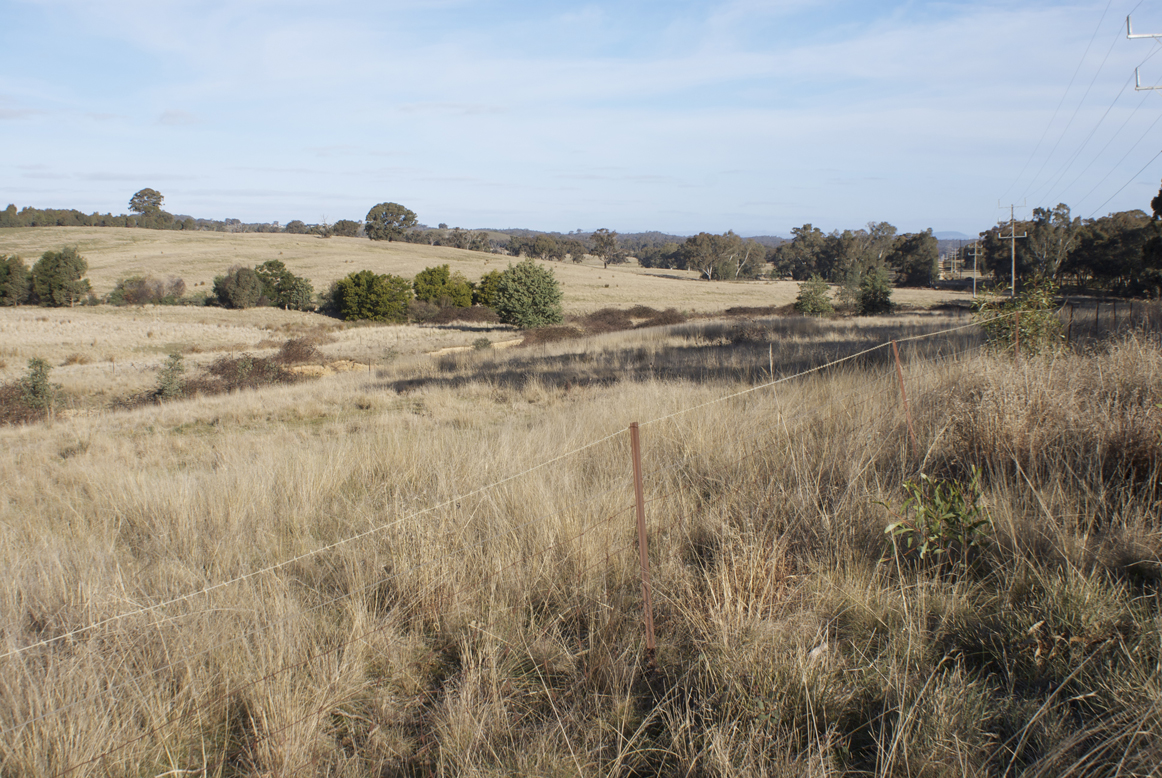
Muckleford Landcare has commenced the development of a community plan for the Chinaman Creek valley. The aim of the project is to develop a long term plan for the economic and environmental resilience of the Chinaman Creek catchment, and to prioritise and secure funding for immediate works in association with Connecting Country.
In early June most landholders in the valley received a questionnaire aimed at creating a snapshot of the current state of the catchment, and gaining some idea of the residents’ visions for the future. The data from the survey is being compiled by Landcare Facilitator, Max Schlachter, for presentation to a meeting of interested parties on Saturday, June 23. Using input gained from the survey responses and from this session Max will begin drafting a detailed plan.
All people interested in finding out more and/or contributing to the process are warmly invited to the meeting. Afternoon tea will be provided.
Chinaman Creek Community Plan Meeting
Ray Bradfield Room (adjacent to Maxi IGA carpark)
Castlemaine
Saturday, June 23, 2 – 3.30 pm
Further information:
Paul Hampton – paul-hampton1@bigpond.com or 54742189
Prescribed burning
The Spring of 2011 saw quite a deal of prescribed burning in the Muckleford Forest as part of DSE’s fuel reduction program. Now is a good time to walk through the Forest and see the impact of this burning. And it is timely to question the value of prescribed burning overall, as discussed in a recent edition of Background Briefing on ABC Radio National – follow this link to listen to the program http://www.abc.net.au/radionational/programs/backgroundbriefing/2012-02-19/3829372
Plus there is recent research questioning the extent to which Aboriginal people used fire to control vegetation – http://www.abc.net.au/science/articles/2010/12/06/3085726.htm
For a first hand look at the impact of prescribed burning in the Muckleford Forest, you may like to join the first of the FOBIF bushwalks for 2012 – details here – http://www.fobif.org.au/walks/
Koala
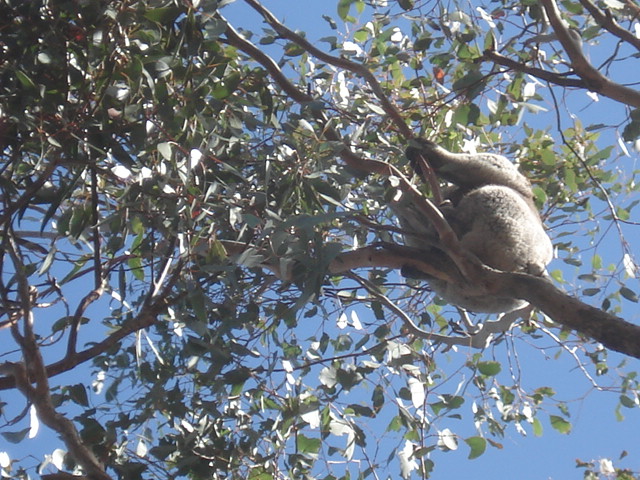
Out walking today with my dog on our bush block near Chinaman Creek, North Muckleford when he suddenly dashed into the bush a few metres. Almost before I had registered what was happening I saw a koala bound up the nearest tree and narrowly escape his frantic attention.
I put the dog on the lead, returned to the house to get my camera and managed to get a couple of photographs.They are not very revealing because it had climbed to the very top of the tree, but they are some proof if needed. One is posted below.
I have come across koalas in this part of the property several times in the last few years and the sitings are usually singular. There has on each occasion been a lone animal and in the days and weeks following I don’t see them again, although I concede that they are hard to spot in the trees at any time.
Is it possible that the property is part of a regular migration route? If that is the case, where are they likely to coming from and going to? Could it be a seasonal phenomenon? Have other people in the area spotted koalas from time to time and at any particular time of the year? Some advice on these issues would be appreciated.
Nest Box Arrivals
Connecting Country has been busy distributing nest boxes designed for Brush-tailed Phascogales throughout the Shire. We have half a dozen on our property at Woodbrook. During monitoring, Bryan McMullan from Connecting Country discovered Sugar Gliders (Petaurus breviceps) in several of the boxes and took the following photographs.
Sugar Gliders are assessed as ‘widespread but scattered’ in the region and ‘moderately common at some sites’ (Chris Tzaros). They are most common at sites with mature trees ‘with a well-developed understory of Black Wattle, Silver Wattle and Golden Wattle’. There are not many mature trees at our place because of rapacious timber-felling in the past, but there is an extensive cover of coppiced re-growth. It seems that the newly arrived man-made habitat is serving a valuable purpose.
The photograph below shows a female brood nest ready for the breeding season. No further monitoring will take place until the breeding season has concluded.
There is also clear evidence of prior occupation by bees. The colder weather seems to driven them away.
And for further reference and contrast, below is a typically inelegant Phascogale nest from another site. It seems our resident Phascogales are comfortable enough at the moment in the ceiling of our home – and who can blame them – what with the pre-insulated cavity and reliable slow combustion heating from below?
Thanks to Bryan McMullin for the photos.
Muckleford Gorge
Members and supporters of local Landcare groups had a rare opportunity to visit the Muckleford Gorge on Sunday 15 May. The visit was scheduled as an activity of the Friends of the Box Ironbark Forests group (FOBIF). As a first-time visitor to this much-vaunted but somewhat secretive location, I was wondering if the Gorge would live up to expectations. I am happy to report that the Gorge was even more spectacular and stunning than anticipated, no doubt enhanced by the volume of water still flowing down its midst.
A large group of walkers assembled at the Point View property for a welcome by owner and sheep farmer Ian Garsed. Unfortunately, due to the vicissitudes of local football, Ian was unable to accompany us on the walk.
The first section of the walk was along the eastern ridge of the Gorge and then down the track to the river flats and The Palace, a favourite gathering place for the Garsed family. Down close to the creek the evidence of the January floods was still prominent in the fences, in the trees and along the creek bed.
After crossing the creek we climbed to the top of the western ridge, noticing the very different geological structure and vegetation. From the top of the ridge the volcanic structure of the eastern side of the Gorge was most evident.
From here the group descended to one of the most scenic sections of the Gorge featuring some impressive rock walls, significant trees and wonderful native grasses. There was still a steady flow of water through the Gorge but some of the pools afforded lovely reflections.
Further along the creek we discovered some interesting specimens of Dianellas along with a number of small ferns emerging from various rock formations.
On the eastern bank of the Gorge a number of large eucalypts were impressively intertwined with the surrounding rock formations. enabling them to cling to some precarious positions over the creek.
Climbing back out of the Gorge we passed some fine examples of sedimentary rock laid down in layers and uplifted by earth movements. These rock formations were home to an all together different range of plant life, principally fungi and mosses.
The group returned to the ford and The Palace for a debrief with Ian Garsed. A number of interesting aspects of the history and the usage of the Gorge were discussed. Finally the walkers climbed back up to the eastern plateau and the conclusion of the expedition.
Muckleford Gorge is a very special feature of our local landscape and one with high conservation values. The Gorge is currently under a Bush Tender conservation agreement between the landowner and DSE. This arrangement should ensure that the unique aspects of the Gorge will be maintained and enhanced for the foreseeable future. For this we should all be very grateful. And if you ever have an opportunity to visit Muckleford Gorge (with the active consent of the landowner, of course) don’t miss it!